

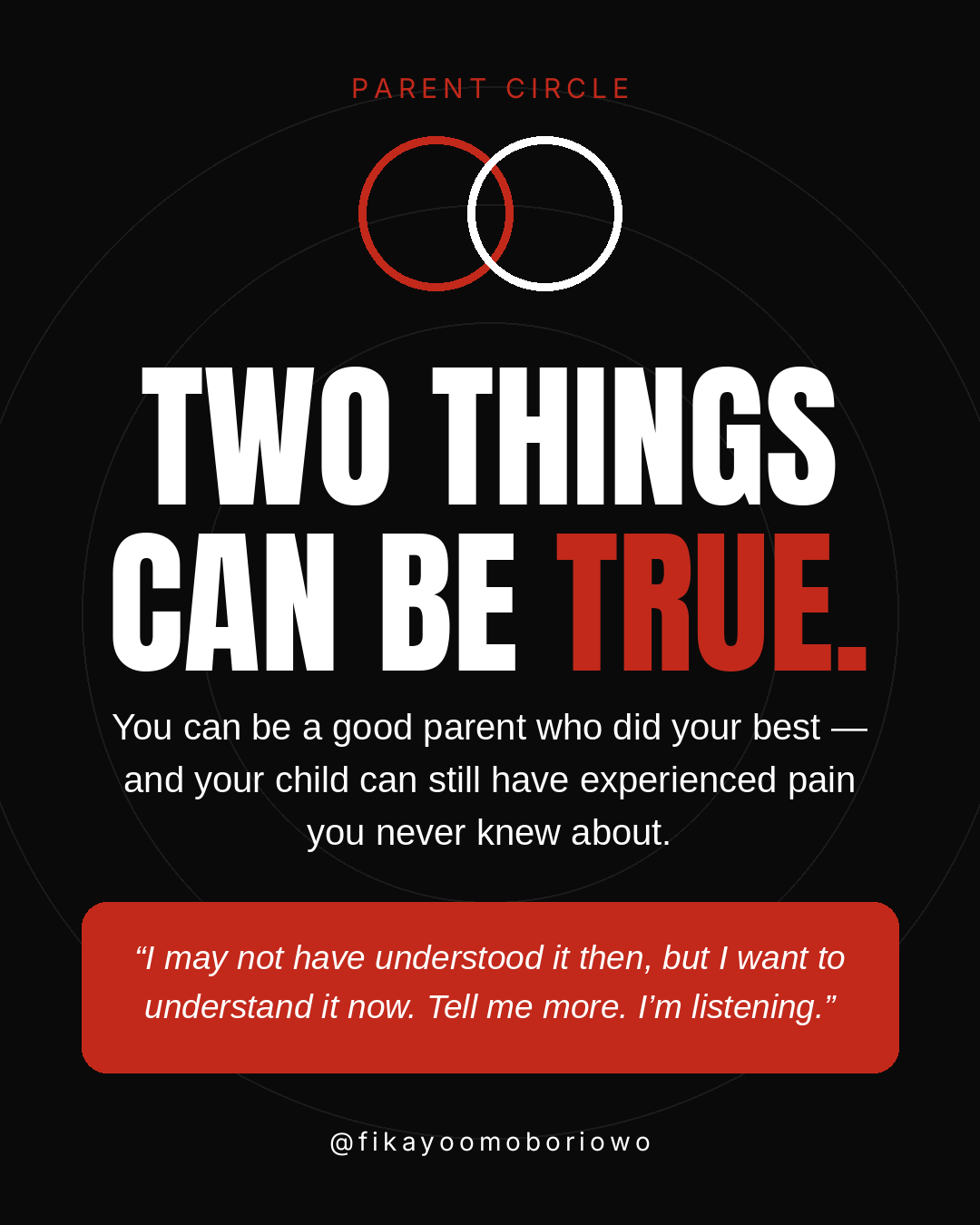
You can be a good parent who did the best you knew how to do with the knowledge, resources, and capacity you had. And your child can still have experienced pain you never knew about. They may have struggled silently. They may have experienced rejection, fear, loneliness, emotional neglect, or even abuse. Some of their experiences may have happened beyond your awareness or control. Your truth matters. But it is not the only truth that matters.
Sometimes, when children finally find the courage to tell us what they went through, we respond by defending ourselves.
“But I gave you everything.”
“But I sacrificed so much.”
“But I never knew!”
Perhaps all of that is true. But can we make room for their truth, too? Can we listen long enough to understand what they experienced without turning their pain into an accusation we must immediately defend ourselves against?Can we recognize that our children are individuals with experiences, emotions, and internal worlds that may be different from our own? Your child should not have to invalidate their experience to validate your effort.
And they should not have to carry the burden of protecting your feelings while trying to communicate their own pain.
Parenting is not only about what we intended to give our children. It is also about our willingness to understand what they experienced, recognize what they needed, and respond when we discover that something was missing.
You can have done your best and still have something to learn.
You can have loved your child deeply and still need to apologize.
You can have been a good parent in many ways and still have areas where your child needed you to do better.
This is not an invitation to condemn parents. It is an invitation to grow beyond defensiveness.
Because the goal is not to win the argument about whether we were good parents.
The goal is to build relationships where our children can tell us the truth without being punished, dismissed, or made to feel guilty for telling it.
Sometimes, the most powerful thing a parent can say is:
“I may not have understood it then, but I want to understand it now. Tell me more. I’m listening.”
Let’s raise children who know they can come to us with the truth—even when that truth is difficult for us to hear.